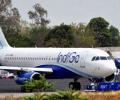
The revised policy, which has come into effect since last week, means passengers who are looking to skip the long queues at airports will have to shell out a fee for it. For IndiGo, the lowest seat fees is Rs 100 while for SpiceJet it is Rs 99.

Domestic airlines are preparing to offer lower fares for passengers without check-in bags in a move to improve seat occupancy and market share. IndiGo chief executive officer Ronojoy Dutta indicated the airline's interest to offer zero bag fares in an interaction with Bloomberg. Regulatory caps on fares and capacity related to Covid-19 have prevented IndiGo from taking a decision and the airline is discussing the issue with the government, he said.

Domestic jet fuel prices are up 7%, but are still 14% lower on a y-o-y basis. While lower fuel prices have brought respite to airlines, their non-fuel costs are rising because of rupee depreciation

The impact of Trump's announcement of increasing import tariffs will have negligible benefit for India not because of companies trying to shift from China to other countries or their supply chains being affected due to their Chinese operations but because of our faulty policies, explains Mudit Jain.

The airline pitches its product and service, keeps silent about price in a new campaign as it looks to win over young business travelers.

YRF may come out of the debacle fairly unscathed financially. The exhibitors and smaller distributors will take almost 75% of the hit.

Sooryavanshi and Annaatthe have already collected 6 percent of the film industry's 2020 revenue.

Corporate earnings got a big boost from the fall in commodity and energy prices in July-September 2023 (Q2FY24) despite a slowdown in revenue growth during the quarter. The combined net profits of 3,123 firms that have declared their results so far were up 38 per cent year-on-year (Y-o-Y) to Rs 3.07 trillion in Q2FY24, up from Rs 2.24 trillion a year ago. Earnings were, however, down 3.5 per cent on a sequential basis from Rs 3.18 trillion in April-June (Q1) FY24.

From croissants to Galouti kebabs and Medu vada, Indian carriers, both low-cost and full-service, are revising their in-flight menus to offer passengers a differentiated fare as competition is heating up amid the boom in air travel with the waning of Covid-19. On Monday, Air India, which was taken over by the Tata Group on January 27, unveiled its new domestic in-flight menu comprising gourmet meals, new appetizers, desserts, and local dishes. Air India's economy class passengers would now be served dishes such as Mushroom cheese omelette, Dry jeera aloo wedges, and Garlic tossed spinach and corn for breakfast, and Vegetable biryani, Malabar chicken curry, and mixed vegetable poriyal for lunch.

'Like every Budget, this time, too, there is chatter around tinkering with the long-term capital gains tax.' 'Investors may not want to jump into the markets until there is clarity on this front.'

The national carrier has started approaching Indian banks and public sector undertakings for disposal of these properties including floorspace in prime locations.

Days after low-cost carrier AirAsia announced it would launch its India operations by the end of the year, IndiGo Airlines President Aditya Ghosh, 38, tells Sudipto Dey in an interaction why his airline is not one that should be worried.

Unseasonal rains watered down the performance of consumer durables companies as temperatures cooled, impacting the sales of refrigerators and air conditioners (ACs) in the 2023-24 (FY24) April-June quarter. Centrum says in its report on the sector that the trade channel indicates a 25-30 per cent year-on-year (YoY) decline in sales of refrigerators and ACs in April and May due to restricted buying. "While some green shoots in demand were visible in June, overall growth for the quarter is likely to remain at a negative 10-12 per cent," observes the brokerage.

Corporate India reported high double-digit growth in net profit for the fourth consecutive quarter in October-December 2023 (Q3FY24), driven by margin gains from lower prices of raw material and energy.

Two months after launch, low-cost warrior AirAsia is expanding to uncharted routes in India.

Air India on Thursday increased the fuel surcharge component in fares on several routes.
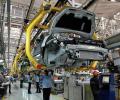
The K-shaped economic recovery in India from the pandemic slowdown shows in corporate results as well. The automobile sector, which represents big-ticket consumption, continues to do well and has increased its share in corporate revenues and profits while fast-moving consumer goods (FMCG) companies that sell low-ticket consumer goods are struggling with poor sales and earnings growth. The share of the automobile sector, including makers of auto ancillaries, in corporate net sales rose to a 10-quarter high of 10.05 per cent during July-September 2023 (Q2FY24) from 8.94 per cent a year earlier and 9.75 per cent in Q1FY24.
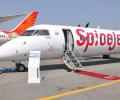
The secret behind Singh's success was that he mostly set about undoing all the mistakes made by the Marans, points out Anjuli Bhargava.
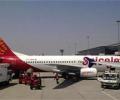
Some airline sources, however, fear it will reduce overall yields

The headline for corporate profit growth has been very encouraging in the July-September quarter (Q2) of 2023-24 (FY24), with the combined net profit of listed companies up by 38 per cent year-on-year. However, the earnings distribution has been very lopsided, with most of the growth coming from public-sector oil-marketing companies (OMCs), banks, non-bank lenders, automobile (auto) companies, and cement producers. By comparison, companies from information technology services, fast-moving consumer goods (FMCG), retail, and consumer durables were disappointed, experiencing a sharp slowdown in net sales growth and a relatively muted increase in reported net profit.

How much is Tanu Weds Manu Returns making at the box office? We show you the math.

The well-reviewed film crosses Rs 300 crore revenue mark.

Unlike Air India and Jet Airways, which have revised downwards free check-in baggage allowance on domestic flights, GoAir has made provisions for pre-purchasing excess baggage limits.

IndiGo's co-founder and interim CEO Rahul Bhatia said profitability was significantly impacted by costs pressure from the increases in fuel price and the depreciation of rupee as well as competitive fare environment.

Automobile manufacturers, new and old, as well as ancillary suppliers are set to spend a combined Rs 70,630 crore over the next five years on either entering the electric vehicle segment or stepping up their presence in it. Data culled from announcements made by firms shows India, the world's fifth largest automobile market, is poised to receive one of the biggest capex pushes ever to fuel the transition from internal combustion engines to electric motors and batteries as part of a green drive. The EV push, egged on by the government's emphasis on electric mobility to meet its net zero targets, is expected to yield at least 25 electric vehicles - new ones as well as electrified versions of existing vehicles running on internal combustion engines.

Electric vehicle market is likely to attract investments of Rs 94,000 crore over the next five years and is expected to generate business opportunities in the real estate sector, according to a joint report by Colliers India and Indospace. The report 'Electric Mobility in Full Gear' mentioned that the electric vehicle (EV) industry in India is currently at a nascent stage but it is likely to grow, backed by government initiatives and a move towards recognising climate change. "India is taking a step towards sustainability and has vowed to cut its carbon emissions. "At the recently concluded CoP26 summit, India pledged to reach net-zero carbon emissions by 2070. "In India, the transport sector is currently the third-largest emitter of CO2. This is leading to increased thrust on EVs in India," it said.

Given the cost structure in the country, it won't be easy for AirAsia to offer 'Nano' fares and still make money.

The market, however, reacted negatively to SpiceJet's announcement and the company's stock dropped by 0.87 per cent as analysts became wary of diversion into a new business during a high fuel price environment.

Airlines are slashing salaries and re-negotiating vendor contracts as drastic fall in passengers has hurt revenue. Go First has cut staff salaries by around 16 per cent while IndiGo and SpiceJet are enforcing a leave without pay (LWP) policy and pay by the hour structure respectively to prune expenses. Vistara, which reversed pay cuts for junior staff including managers and cabin crew in March, is not touching employee salaries at the moment and instead focusing on vendor renegotiation and maximising cargo revenue. An Air India executive said efforts are on to pay salaries by 7th or 8th of June.

Disney's The Jungle Book has taken the box office by storm.

Faced with problems of acquiring land for various projects in the state, the Orissa government has decided to create exclusive land banks for industrial purpose.

With cash shortage and plans going awry, the AirAsia owner is looking to cash out of the venture he built with Ratan Tata in 2013.
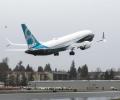
Govt's decision to allow in-flight Wi-Fi doesn't take off with budget airlines, full-service carriers enthused
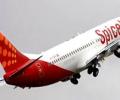
The additional stake will cost the promoters Rs 312 crore (Rs 3.12 billion).

While margins contracted by 30 basis points on y-o-y basis, they fell a sharper 120 basis points on a sequential basis to 16.8 per cent. Profitability was impacted adversely due to subdued demand, tepid realisations in commodity sectors, and negative operating leverage.
After the hit of the pandemic, India Inc is now worried about the adverse impact of inflation and higher commodity prices on their revenues and margins. The inflation scare is the strongest among manufacturers of consumer goods such as automobiles, consumer durables, and fast-moving capital goods (FMCG). Companies across sectors fear they will not be able to pass on the hike in input costs to their consumers due to weak demand, which, in turn, would lead to a hit on margins and profitability in the forthcoming quarters.

A total of 635 companies have declared their third-quarter results and reported 22 per cent rise in revenue and 47.3 per cent growth in net profit on an average.
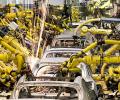
With little clarity on the demand outlook, investors should wait out the next couple of quarters rather than rush in to catch a falling knife, says Ram Prasad Sahu.

The initial speculation over who is likely to down shutters seems to have given way to a resigned acceptance that all the players are determined to stay in the game.

Reliance Industries Ltd on Thursday announced a Rs 75,000 crore investment in new energy business over the next three years as the operator of the world's largest oil refinery pivots towards a greener and cleaner version. Reliance will build solar manufacturing units, a battery factory for energy storage, a fuel cell-making plant and an electrolyzer unit to produce green hydrogen as a part of the business, chairman Mukesh Ambani said at the company's annual general meeting with shareholders on Thursday. It will also set up 100 gigawatts (GW) of solar power generation capacity by 2030 and invest in setting up a carbon fibre plant.
